


The Rationale
Before jumping straight into the benefits and hurdles, we spent time making sure that everyone understood the meaning of ‘CIO’. We produced a PowerPoint on this and shared it with everyone.
Essentially, a CIO is a legal structure designed specifically for non-profit organisations in the UK. Introduced by the Charities Act 2011, a CIO combines the benefits of having a separate legal identity, like a company, with the simplicity of a traditional unincorporated charity.
The benefits of Incorporation
If a club becomes a corporate body (incorporated), it is seen in the eyes of the law as a “person” in its own right. This means it can sue and be sued. (We’re hoping not to do that!!) A CIO therefore creates a separate legal entity and has the benefits of a corporate identity, so it can hold property and enter into contracts in its own right. Its trustees and members will not be personally liable for what it does and for the debts of the CIO as long as the decisions are reasonable and lawful. At the moment as an unincorporated organisation, clubs have to hold contracts and property directly as individual people, so contracts and agreements are made personally by each individual member, rather than by a corporate body. This means if things go wrong, the club members can be sued individually.

The benefits of Limited Liability
CIO status offered us limited liability – this means that in the event of liquidation or litigation any debts will be paid out of the organisation’s funds and once these have been exhausted trustees are not personally liable for any further funds. However, as an unincorporated association clubs have personal unlimited liability. You can have indemnity insurance, but it may not be sufficient for litigation. This CIO status protection provides peace of mind and encourages competent people to take up trusteeship roles without fear of personal financial loss.
The Benefits of One Regulator
A CIO offers a modern legal structure specifically for charities, regardless of income. It only has one regulator; The Charities Commission, rather than the more complicated structure of being a registered charity and a company limited by guarantee, where charities are regulated by The Charities Commission and Companies’ House. As a club that focuses largely on advocacy and direct programme action rather than fundraising we were pleased to see the ‘regardless of income’ stipulation.
This streamlined approach would simplify administrative processes, reduce duplication in reporting and decrease the risk of non-compliance. This would free up more time and resources to focus on our mission and activities.

Safeguarding the Future of the Charity
We most likely, are not thinking of employing anyone, entering into contracts or owning/leasing any property, but this status gives more flexibility for future developments in the community.
Not only that, but a CIO has its own legal identity, separate from its trustees and members. As a result, it can enter into contracts, employ staff and own property in its own name. This simplifies administration, making day-to-day transactions, such as renting a building or opening a bank account, more straightforward. This separate identity can also give potential donors and partners more confidence in the charity’s professionalism and longevity.
Running to Accepted Standards and Opening up New Funding Sources
As a registered charity, this status demonstrates that we are running to accepted standards. This invokes confidence for stakeholders and ensures sustainability and underlines our long term commitment. It also attracts funding/donations. We have witnessed some very concerning money collection practices by some organisations.
As a CIO we can register with HMRC and we are then eligible for Gift Aid, which means the government will give 25p in every £1 Gift Aided to us. This can be incredibly important if someone leaves a legacy. As a CIO we would be registered on a database with The Charities Commission which allows a solicitor to easily find local organisations to which an individual may wish to leave an amount in their will. Some funders will only fund registered charities. The CIO structure can also provide a solid foundation for growth, better decision-making and greater accountability. This may make the charity more attractive to grant-makers and other funders who often want evidence of good governance in the organisations they support.
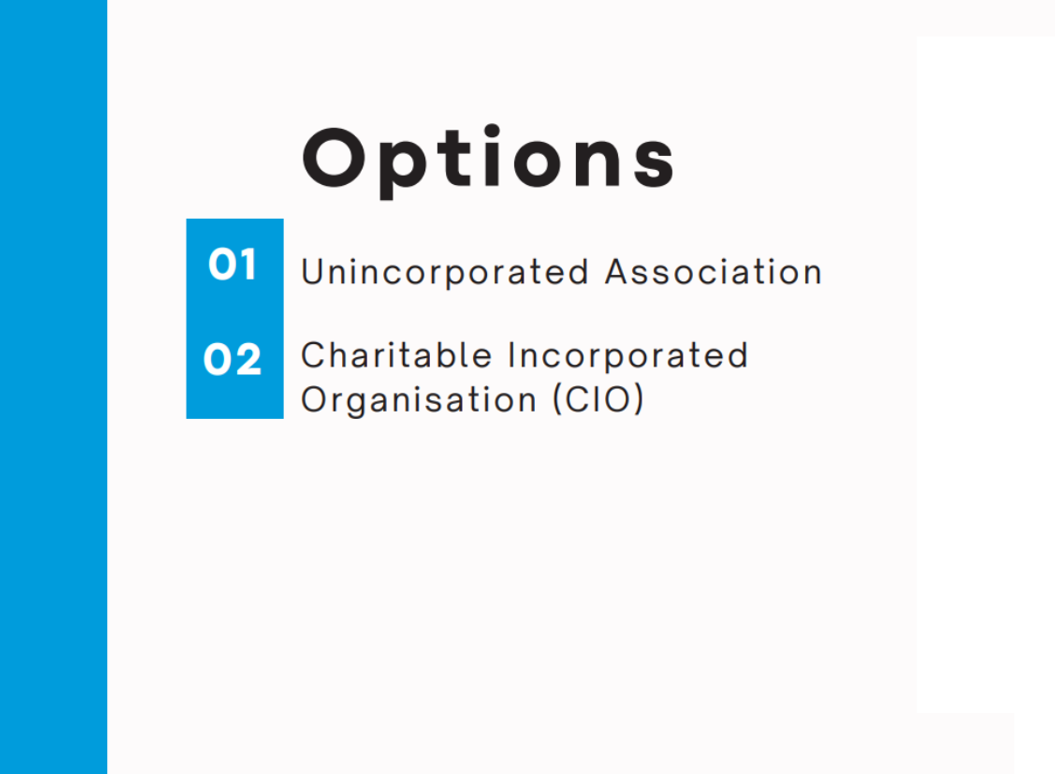
The CIO Options
A Foundation CIO is governed solely by its trustees, making it a straightforward option for charities where decisions are managed by a small group without wider member involvement.
In contrast, and in keeping with our club’s way of operating, an Association CIO includes a broader membership. Members have the right to vote on key matters such as trustee appointments or changes to the organisation’s rules. This approach is ideal for charities that aim to engage a larger group in decision-making and so ideal for our club.