

 Soroptimism began in California in 1921 and soon spread across the Atlantic, reaching Great Britain in the mid-1920s. At first, British clubs belonged to the European Federation, but as the movement grew, the Federation of Great Britain and Ireland was established in 1934.
To help clubs stay connected and work together, the new Federation introduced nine Divisional Unions (DUs), providing an important link between local clubs and the wider organisation. Initially introduced as a one-year experiment, the arrangement proved successful and became a permanent part of Soroptimist life in 1936.
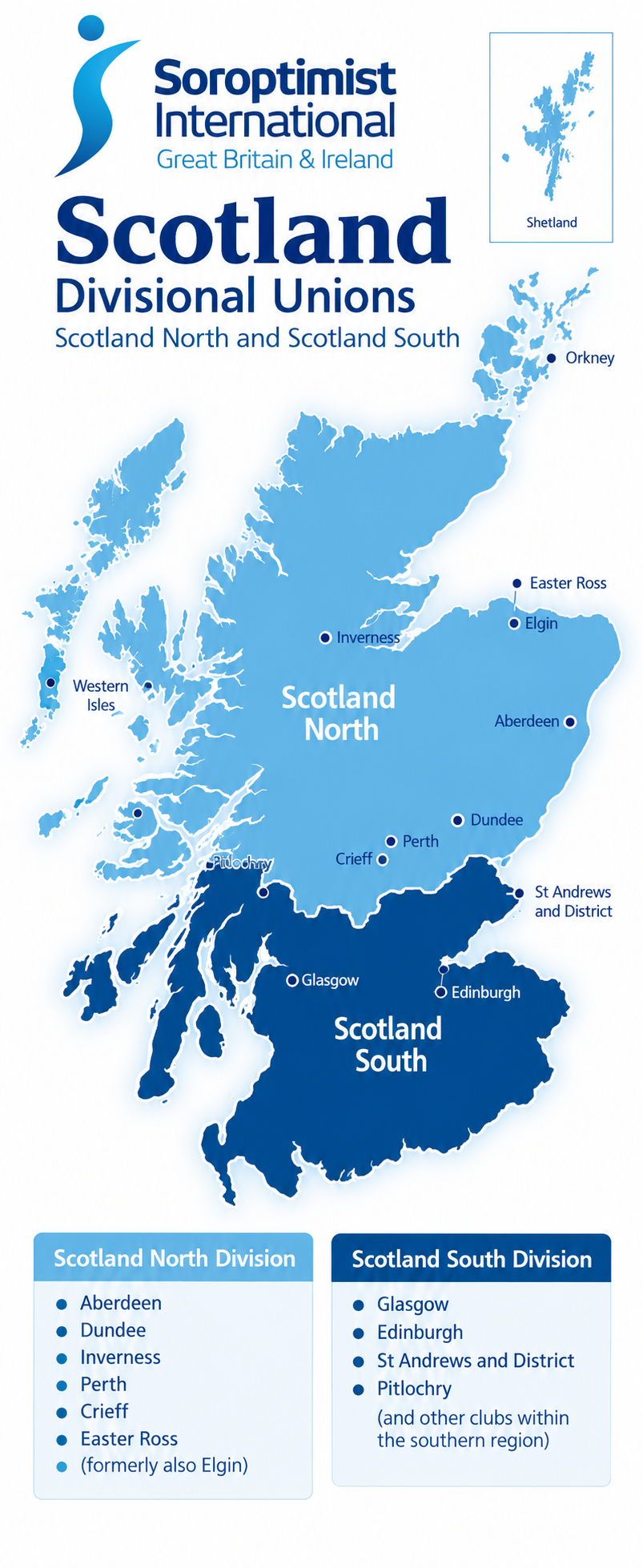
That same year, Scotland’s clubs were reorganised into two groups, Scotland North and Scotland South, replacing the earlier East and West divisions. Glasgow and Edinburgh became part of Scotland South, while Aberdeen, Dundee, Inverness and Perth formed Scotland North. Over the years, clubs in Crieff and Easter Ross joined the northern group, while Elgin, Pitlochry and St Andrews and District also enjoyed periods of active membership.
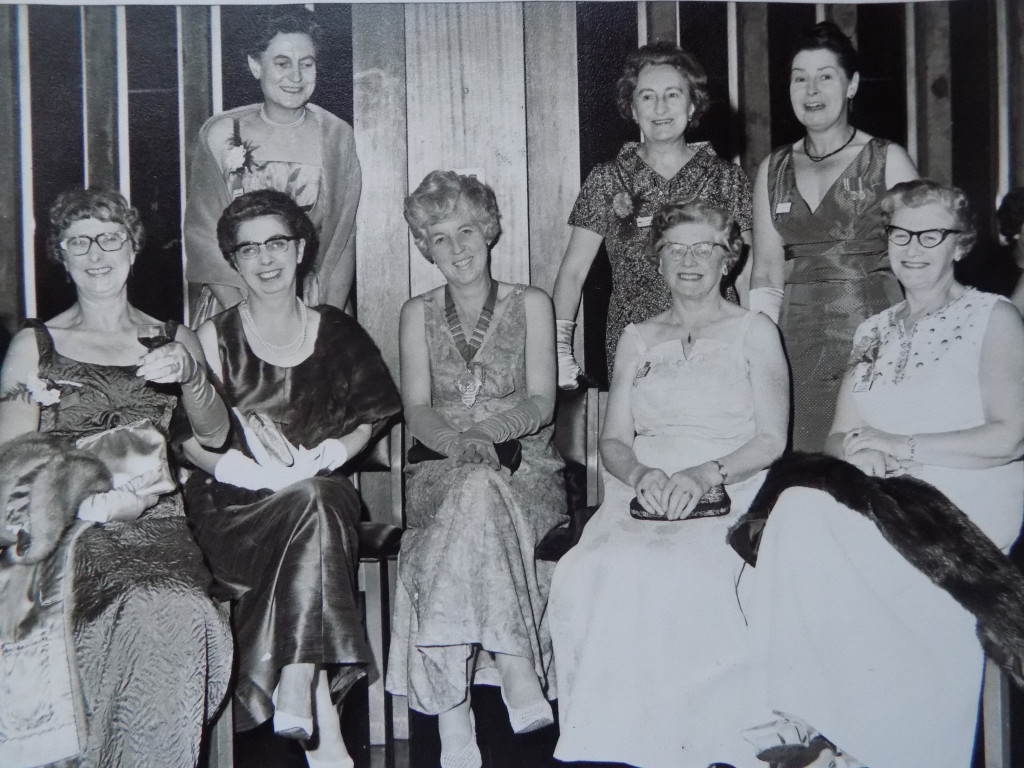
From the beginning, bringing members together was an important part of Scotland North’s activities. Meetings took place four or five times a year, moving between club towns, with each club taking its turn to provide the Divisional Union’s president and secretary.
In those early days, meetings were rather more formal than they are today. Only Divisional Union officers and elected club representatives could attend, although there was always an opportunity to catch up with fellow Soroptimists afterwards over refreshments!
As the years passed, meetings became more welcoming and inclusive. Eventually, members from any club were invited to attend as observers, helping to strengthen the friendships, connections and shared sense of purpose that have always been at the heart of Soroptimism.