
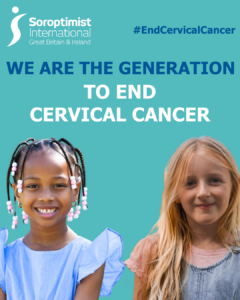
For the first time in history, the world resolved to eliminate a cancer.
In 2018, the World Health Organisation’s Director General issued a call to action to scale up prevention, detection, and treatment and called on the world to finally eliminate cervical cancer as a public health problem.
In 2020, 194 WHO member states responded to the call, passing a historic resolution through the World Health Assembly, and on 17 November, the WHO launched the strategy.
Few diseases reflect inequalities as much as cervical cancer. It is the fourth most common form of cancer among women worldwide.
- More than 85% of those affected are young, uneducated, and live in the world’s poorest communities.
- 90% of deaths occur in low and middle-income countries.
- Of the 20 countries hardest hit, 19 are in Africa.
- The disease kills more than 300,000 women every year.
- Annually, over 600,000 new cases are diagnosed.
Even in high-income countries, the inequality of cervical cancer disproportionately afflicts women of colour, minorities, and other marginalised communities.
WHY IT MATTERS
Eliminating Cervical Cancer is About Gender Equality:
Access to primary healthcare can protect women with simple preventative services. By tackling cervical cancer, we begin to address the harm that women confront when their human right to health is neglected, and when we fail to prioritise the basic services they deserve.
Eliminating Cervical Cancer is About Ending a Cycle of Poverty and Protecting Children:
For poor families, when a mother gets sick and dies, the family sinks deeper into hardship, and the health of the children she leaves behind is affected. Poverty creates the circumstances for cervical cancer, which then further compounds poverty.
Eliminating Cervical Cancer will bring the World closer to achieving Sustainable Development Goal 3.4:
Cervical cancer is the only noncommunicable disease that can actually be prevented. Curing the disease will make a significant contribution to reducing premature deaths by one-third by 2030.
The theme of World Cervical Cancer Elimination Day on 17 November 2026 is ‘Together We can Eliminate Cervical Cancer’.
The day highlights progress toward achieving the 90-70-90 targets for cervical cancer elimination and ongoing efforts to ensure all girls and women can access vaccination, prevention, screening, and treatment.
Achieving elimination will require political leadership and sustained investment, health workers equipped to deliver quality services, and services informed by the knowledge and experience of women and communities.
Reaching the 2030 targets means closing gaps so that no woman or girl is left behind. Where someone lives, how much they earn, whether they are living with HIV, living with a disability, or experiencing exclusion, should not determine whether they can access prevention, screening and care or have their children vaccinated against HPV.
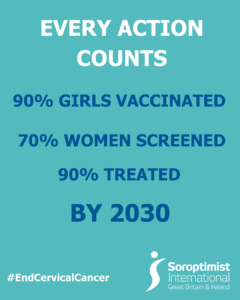 Elimination will take all of us:
Governments must lead, but eliminating cervical cancer also depends on health workers, women and communities, advocates, researchers, civil society and partners each bringing their strengths to the same goal.
For the past two years, members of Soroptimist International Great Britain & Ireland (SIGBI) have been leading an awareness-raising campaign and taken an active role in educating women about cervical cancer and HPV vaccination; thereby empowering them to make informed decisions for themselves and their children’s lifelong health.
This 17 November, Soroptimists across the UK, Asia and the Caribbean will continue to support the shared goal of eliminating cervical cancer and recognise the collective effort needed to ensure progress reaches women and girls everywhere.