
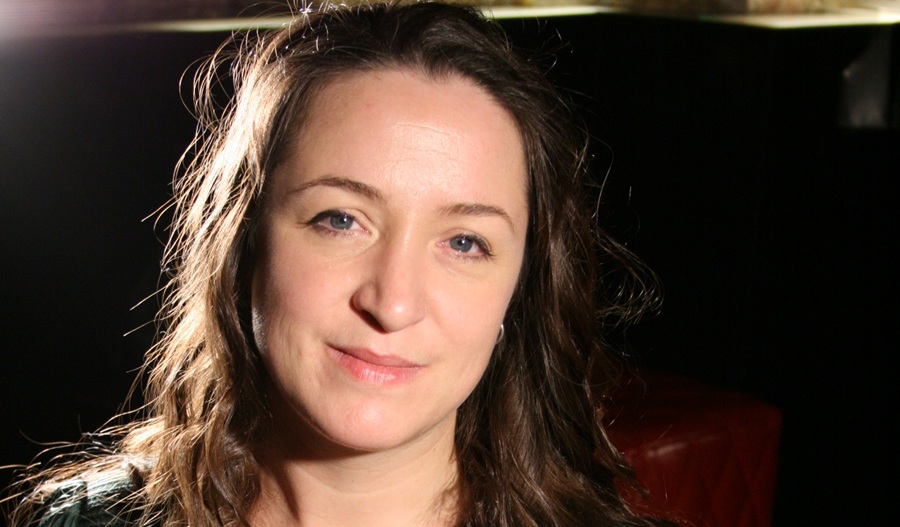
Blog by Jane Hadley of SI Wolverhampton
Informed, Not Intimidated: Tiffany St James on AI
What a way to start a conference! Within minutes of taking the stage, Tiffany St James had us on our phones voting on Slido, laughing along, and posing for a selfie with her. She was animated, warm and completely at ease with a room full of Soroptimists. Her opening question set the tone: “How can I help you understand AI?” She promised not to tell us what to think, only to help us make our own decisions.
You are already using it
Tiffany’s first point brought smiles of recognition. AI is already woven into our days, often without our noticing. It is there when we book a table at a well-known Italian restaurant chain, when we phone Sky to change a contract, when we make an NHS appointment, even in the letters we receive from our consultants. It sits behind our Outlook spam filters, our satnavs, predictive text and those “you might also like” suggestions, and it is helping to spot patterns in breast cancer screening.
When she asked how we felt about it, the room split three ways: great, sort of, and nothing to do with it. Tiffany welcomed every view. AI as a field is some 60 years old; what changed was November 2022, when ChatGPT put generative AI into everyone’s hands. Her advice was to treat it as an experiment and approach it with curiosity rather than fear. She also touched on the recent Budget, with its promises on data centres that employ and invest locally, on keeping UK data in the UK, and on funding for AI in public services and for helping workers adapt.
Eyes open
Tiffany was refreshingly honest about the risks, and a few messages stood out.
• It makes things up. Generative AI “hallucinates”, producing answers that sound entirely plausible but are wrong. The answer is a human always in the lead, and the habit of challenging polished outputs.
• It can carry bias. Women’s symptoms have long been underplayed in health data, and too few women work in AI development, so products and services can overlook us. Her question for all of us: “Who am I aligning with, and who am I leaving out?”
• It has a cost. Think of the carbon footprint, and of small habits such as not leaving AI note-takers running while we wait for a late arrival. She also warned that transcription can dim quieter voices, and encouraged us to help younger colleagues draft without AI first.
Our power to challenge
For me, the most empowering moment was Tiffany’s reminder that Soroptimists are not bystanders. Technology companies want to be seen as ethical, and an organisation with our voice and values can press them to be. Her point was that we cannot ethically change what we do not understand, so staying away is not the answer. Informing ourselves is.
Tiffany’s Top 10 tools for SIGBI
She finished with a practical list we can all try:
1. Dictation on your phone.
2. Granola AI for meeting transcription.
3. ChatGPT for free AI-generated images, though be aware of the sustainability cost.
4. Canva as a visual maker.
5. Claude, set up with your SIGBI tone of voice.
6. NotebookLM from Google, which creates different reports, training guidelines and even podcasts. She played us an extract, and it was uncannily good.
7. Digital avatars that read out what you write, match mouth to words and translate into 99 languages.
8. Google Meet for near real-time translation.
9. Video editing from simple descriptions.
10. Claude Artifacts for creating newsletter quizzes that give readers actions based on their answers.
She also shared the steps for setting up an AI working group, which I think could be a real gift to our clubs.
Questions from the floor
Tiffany answered every question knowledgeably and with obvious enthusiasm. On data centres, she urged us to inform ourselves: modern closed cooling loops need around 170,000 litres of water to start and then keep working for about 20 years, and some companies are giving back to their communities, for example by building houses. On regulation, the UK has more than the US, and with GDPR behind us we are better protected than some critics suggest; the EU AI Act is worth a look. https://www.europarl.europa.eu/topics/en/article/20230601STO93804/eu-ai-act-first-regulation-on-artificial-intelligence
On the big question of why we need AI if it makes errors, she called it the point of critical thinking: with smarter prompting and good guardrails, it frees us from boring admin. And on the single most important thing SIGBI can do about gender bias, her answer was simple: inform ourselves.
Where Tiffany left us
Tiffany closed by saying the world will change beyond recognition. She worries as much about geopolitics, and about what over-reliance might do to critical thinking, literacy and imagination, as she does about the technology itself. Yet her message was hopeful: be informed, keep humans in the lead, put good guardrails in place, and decide for ourselves how we want AI to be used.
Over to you
So here is my challenge to every member. We are women who have always spoken up when others are overlooked, and this is another place where our voices are needed. Before your next club meeting, will you try one tool from Tiffany’s list and share what you learn, good and bad? Will you ask “who are we leaving out?” whenever AI is used? And will you start the conversation about an AI working group in your club or region?
What will you do first? Tell us in the comments, and let’s move forward informed, not intimidated.
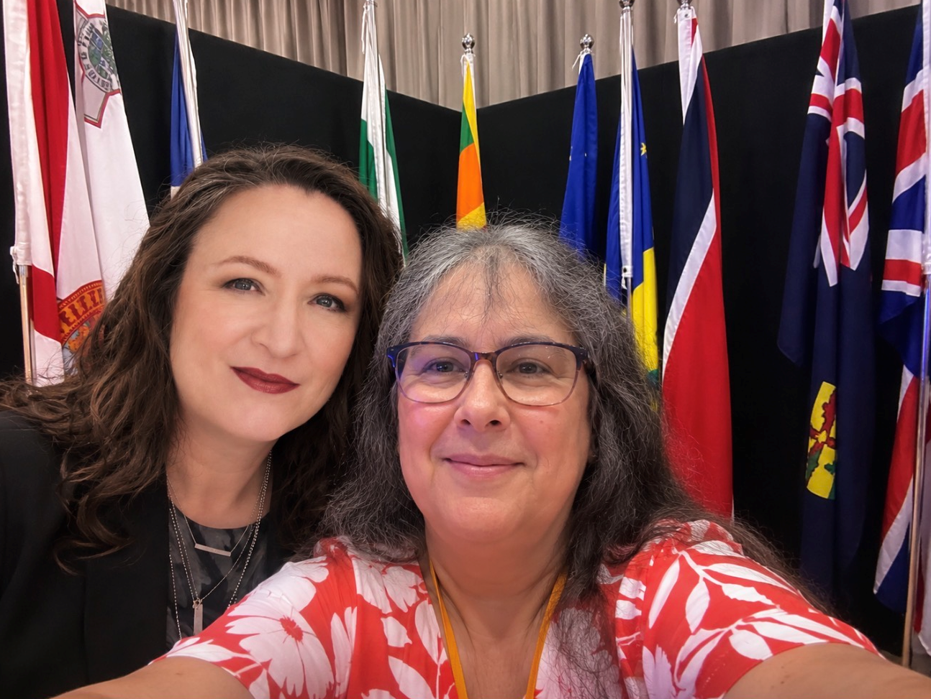
And in true AI style: Here’s one I made earlier.
About Tiffany St James
Tiffany is a Global Digital Strategist. Friendly, approachable, down-to-earth and insightful, her personal mission is to help organisations to transform and compete digitally using Artificial Intelligence (AI). She helps people to understand the practical use of emerging technology, inspiring us to lift our horizons to see what is possible. She invites us to think and act differently … through a digital lens, supported by psychology.
Tiffany brings real issues alive. She shows how to face those challenges, from delivering social impact to harnessing the value of cultural innovation.
Formerly Head of Public Participation for the UK Government, Tiffany was the Strategic Lead in the Cabinet Office across 22 central government departments.
She consulted to the UK Government for 14 years in a timeframe which took us from having no email…..… to Open Data.
In June 2017, Tiffany was invited to set up and run the digital response in Gold Command, which was the global digital and social media response to the tragedy of the Grenfell Tower Fire in London.
In 2025, Tiffany was appointed to the brand-new role as Chief Artificial Intelligence Officer at Liverpool City Region, the first-ever public sector regional CAIO role.
Amongst her many accolades, Tiffany is recognised as one of the 25 women who have shaped the British digital industry over the past 25 years.
Further, she was recently named on the list of the Top 100 Most Influential and Innovative People leading the use of IT and AI in the Public Sector See Apolitical: the social learning network for government.