Blog by Debra Joseph, SI Barbados
After thirty years of membership, Renata knows what has stayed constant in Soroptimism, what has evolved, and what may need to change in the years ahead. Becoming Soroptimist International (SI) President has added a new dimension to that view. She now sees Soroptimism across all five federations, not from a distance, but through direct contact with members, groups and leaders in very different parts of the world.
Strength in Diversity
Two things stood out to her: the strengths that unite and the many ways Soroptimism is lived. The federations differ in size, geography, membership profile and organisational culture, and they face very different realities. Some are relatively stable. Others face declining membership, financial pressure, governance challenges or questions about their future sustainability. Some operate across vast distances and many countries, while others are more regionally concentrated. Member expectations also differ, shaped by culture, generation, professional life and the communities in which members live.
She stated that these differences are part of the richness of SI. But one model does not necessarily serve every federation equally well, and structures that worked in the past may not be enough for the future. SI has a remarkable legacy, and it must be recognised that the expectations of women are changing.
Role as a Global Organisation
Three questions sit at the centre of this moment. What should the role of SI be as a global organisation? Where can SI add the greatest value? And is SI organised in the best possible way to achieve their objectives?
As a first step, the SI Board has established a task force with representatives from all five federations to examine SI’s purpose and role. Its findings will provide the basis for deciding how we can best challenges are met in the future.
Clubs turn ideas into action. Unions and national associations influence national awareness and policy. Federations connect and coordinate work across borders. At the global level, Soroptimist International brings these voices together and presents movement internationally, particularly at the United Nations.
Since 1984, SI has held general consultative status with the United Nations Economic and Social Council (ECOSOC), giving SI an important voice in international discussions affecting women and girls. The Youth Federation has held special consultative status with ECOSOC since 2013. But status alone achieves little. What matters is how this is used.
She reiterated that the role of SI must be more than gathering the work of five federations. It must identify issues where a global perspective, a common voice and coordinated international action can achieve a lot.
An Example: Her Health, Our Future
Engagement with women’s health was already growing across the federations, alongside many valuable initiatives. It was timely and natural to bring these efforts together under one international theme: Her Health, Our Future.
Women’s health is very important, and the challenges too complex. Consequently, for that reason, Her Health, Our Future has been established as a long term focus team that extends beyond individual presidencies and unites the efforts of all five federations.
Women’s health is also much broader than access to medical care. It affects education, economic independence, personal safety and the ability to take part fully in society. It touches every part of SI’s mission.
The Global Gender Medicine Awareness Campaign
The first international initiative under this theme is the Global Gender Medicine Awareness Campaign. For decades, medical research focused mainly on men, often assuming the results would apply equally to women. Yet diseases can present differently in women and men, medication can have different effects, and conditions affecting women are sometimes overlooked or diagnosed too late. The evidence is striking:
• A University of Leeds study, supported by the British Heart Foundation, estimated that over ten years more than 8,000 women in England and Wales died who might have survived had they received the same heart attack care as men.
• In Ireland, the Irish Heart Foundation reports that women are six times more likely to die from heart disease and stroke than from breast cancer.
• Only half of women recognise the symptoms of endometriosis, which the World Health Organization says affects around 190 million women and girls of reproductive age worldwide.
• In Wales, Endometriosis UK reports an average wait of almost ten years for a diagnosis, the longest of any UK nation. The NHS Wales Women’s Health Plan now treats endometriosis as a priority.
Gender medicine seeks to understand these differences by recognising how biological sex and gender related factors influence health, disease, diagnosis and treatment.
Artificial Intelligence and Women’s Health
The challenge has a new dimension. Artificial intelligence is transforming healthcare and offers enormous opportunities. But if the data used to develop these technologies underrepresents women, there would be risks carrying existing inequalities into the healthcare systems of tomorrow. This was one of the central issues discussed at the high level roundtable on women’s health and artificial intelligence, organised jointly with the Commonwealth in London earlier this month.
What Can Soroptimists Contribute?
Soroptimists do not need to become medical experts. They can raise awareness, encourage informed discussion, engage with healthcare professionals, and advocate for change in research and healthcare. And they are not starting from scratch.
The Gender Medicine Working Group
Applications for the International Gender Medicine Working Group exceeded expectations. The chair comes from SIGBI: Aisling Nolan, a member of SI North Kildare in the Republic of Ireland, who has served as National President from 2023 and 2024. She brings extensive experience in charity leadership, fundraising and communications, together with a strong commitment to Soroptimism.
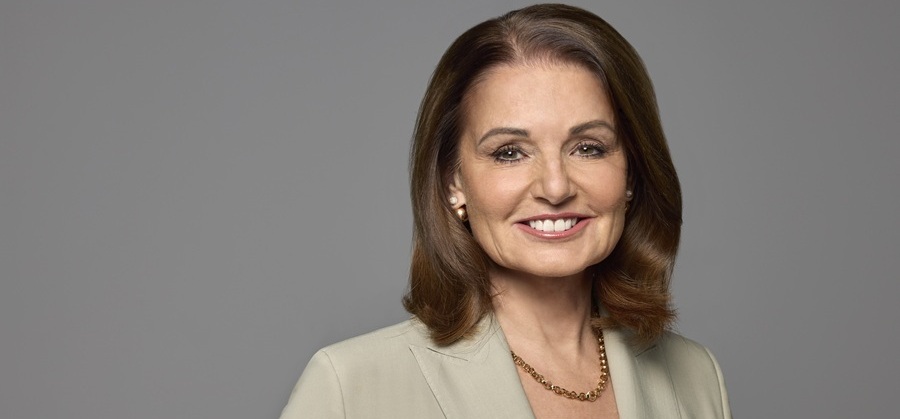
About Renata Trottman Probst
Renata Trottmann Probst is President of Soroptimist International, bringing more than three decades of experience in international governance, organisational leadership, and women’s rights advocacy.
Trained as a lawyer in Switzerland, she spent most of her career at UBS AG in Zurich, where she held senior positions in private banking and organisational development, building expertise in governance systems and human capital management. She subsequently founded her own consulting firm, advising international clients on real estate matters.
Within Soroptimist, Renata has progressed through leadership roles at club, national, and federation levels. As President of Soroptimist International of Europe (2017–2019), she introduced the motto “We stand up for women”—a rallying call that has since resonated across other federations and become central to SI’s advocacy identity. Following her federation presidency, she returned to university to pursue advanced historical studies at the University of Zurich.
She holds a law degree from the University of Bern and an LL.M. from McGill University, Montréal, complemented by executive education at Columbia University in New York.