Skip links


Mary Macarthur Statue and Fighting From Home Statue in Cradley Heath

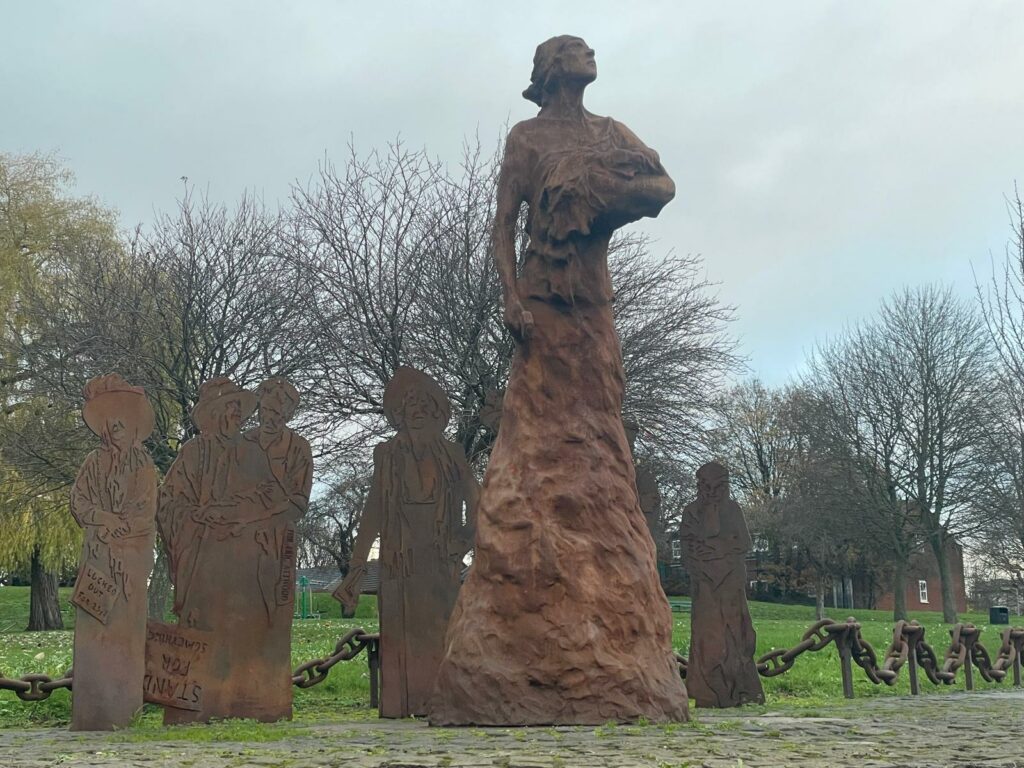
   In the gardens named in her honor stands a statue of Mary Macarthur, the Scottish suffragist and trades unionist who led women chain-makers on strike to raise the minimum wage in Cradley Heath. Mary Macarthur (1880-1921) was born in Glasgow. She was Glasgow Girls’ High School newspaper editor and aspired to become a writer. In her early 20s, as a reporter for a local newspaper in Ayr, she attended a Shop Assistants’ Union meeting. Impressed by their values, she joined the union. Within a year, she got elected as the Union president in Scotland and became the first female representative on the Union’s National Executive. The following year, she moved to London and was appointed Secretary of the Women’s Trade Union League. At 26, Macarthur founded the National Federation of Women Workers, Britain’s Anti-Sweating League, and a newspaper for women trade unionists called Women Worker. Over the next couple of years, she researched the financial conditions of sweated homeworking women. Her research conclusions led to the formation of the Trade Board Act of 1909, which set minimum wages in several trades. In 1910, Macarthur led 800 women chain-makers of Cradley Heath on strike to establish their right to a fair wage. It lasted ten weeks until the last employer agreed to pay the minimum wage. This victory was a milestone that changed the course of history and the lives of thousands of workers who previously had earned ‘starvation wages.’ Following her success, the social reformer Ada Salter invited her to organize the Bermondsey Uprising. There, Macarthur recruited the women strikers and led the negotiations with the employers.
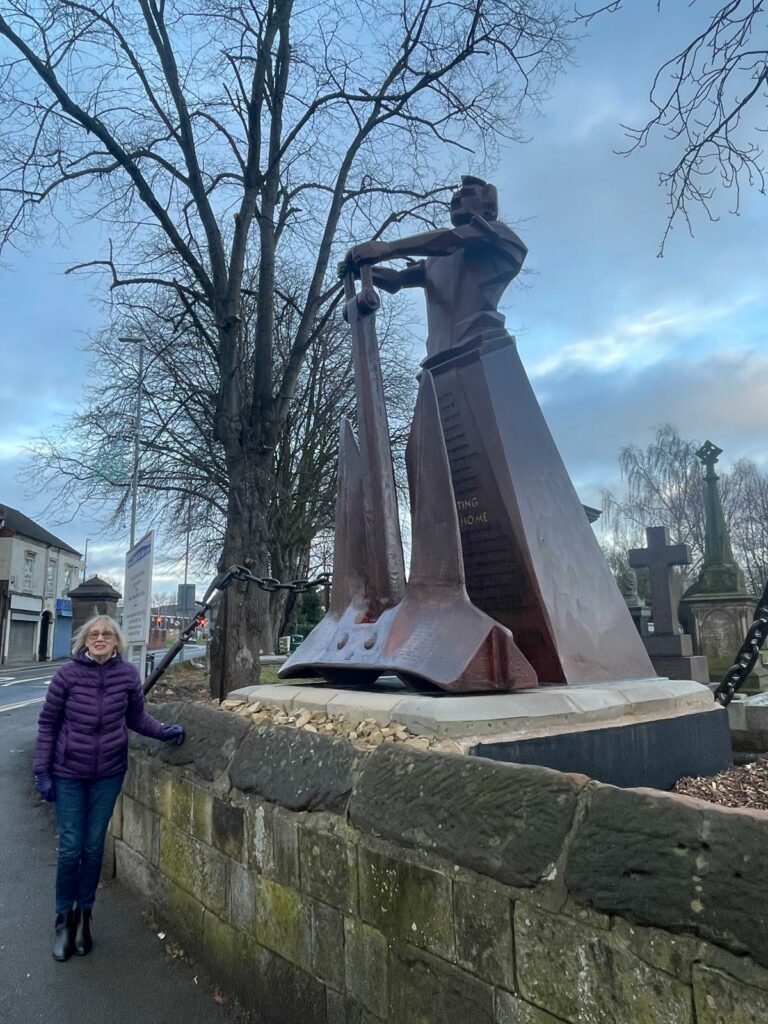
The Fighting From Home statue, featuring an Admiralty Class anchor, is the work of Black Country-based sculptor Luke Perry and has been sited in a churchyard in Cradley Heath, the UK’s former capital of chainmaking. Mr Perry drew inspiration for the statute from his grandfather Eric Attwood’s work to supply the Royal Navy. The 12ft sculpture is a tribute to the approximately five million workers covered by the UK’s schedule of reserved occupations during the war from 1939 to 1945, which prevented labour shortages in sectors essential to the war effort and daily life