

 Soroptimist International St Albans and District marked International Women’s Day with a special event on Monday 10 March. The theme for 2026 is “Rights. Justice. Action for ALL Women and Girls. This is a call to action for the dismantling of all barriers to equal justice: discriminatory laws, weak legal protections, and harmful practices and social norms that erode the rights of women and girls. Data from the United Nations informs us that currently, no nation has closed the legal gaps between men and women. Right now, women have only 64 per cent of the legal rights that men hold worldwide. In fundamental areas of life, including work, money, safety, family, property, mobility, business, and retirement – the law systematically disadvantages women.
 The Club’s Peace Team Facilitator and local magistrate, Denise Powell welcomed our speaker:
“It is my privilege to be introducing Her Honour Judge Lana Wood. Lana sits in the Crown Court in St Albans, and I have had the pleasure of sitting with her on some appeals, where her empathy was apparent even within the formal setting of a court hearing. Lana was also responsible for setting up some innovative training for Magistrates and Judges on the effects of imprisonment on women.”
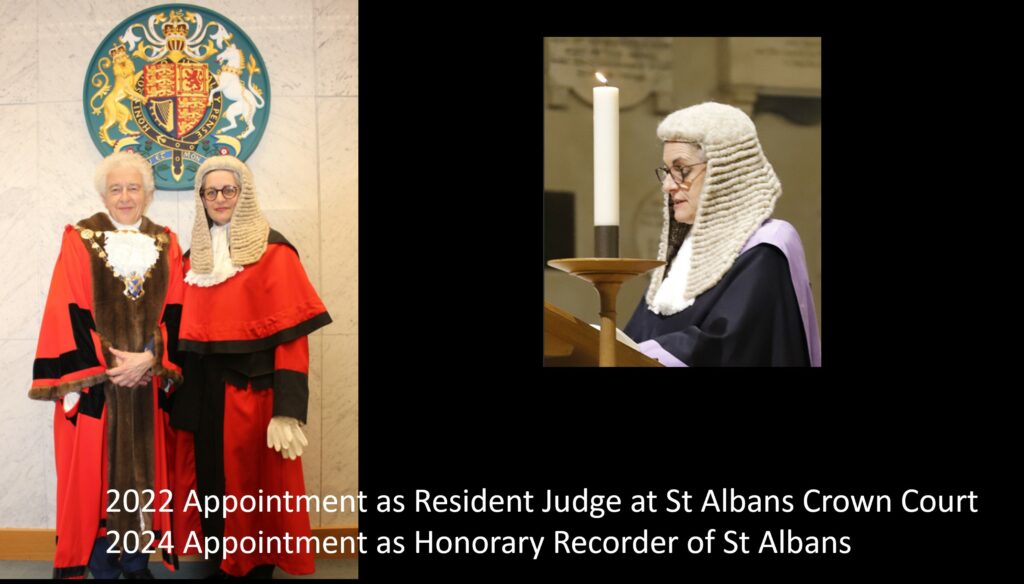
Lana Wood was the first woman to be appointed Resident Judge of St Albans Crown Court (in 2022), and is the first person to have had the title of Honorary Recorder of St Albans and District conferred on them by the City and District Council (2024). She has been a full-time judge since 2012, having previously been in practice as a barrister. Lana gave a frank, amusing and insightful talk about her career, weaving in anecdotes and punctuating the personal with statistics about the changing face of the judiciary and the profession over her lifetime.
Her slides are available to download here: Lana Wood IWD SISTA Presentation v2
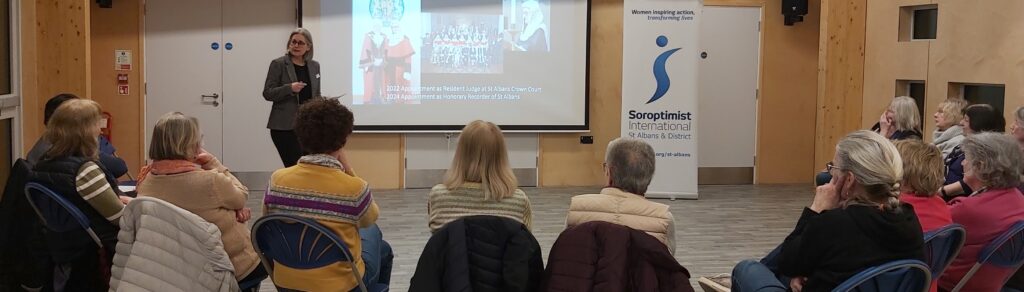 The text that follows is a very brief summary of Lana’s talk – it gives a flavour, however Club Members and guests who were present were completely blown away and almost left speechless, which is very rare indeed for Soroptimists!
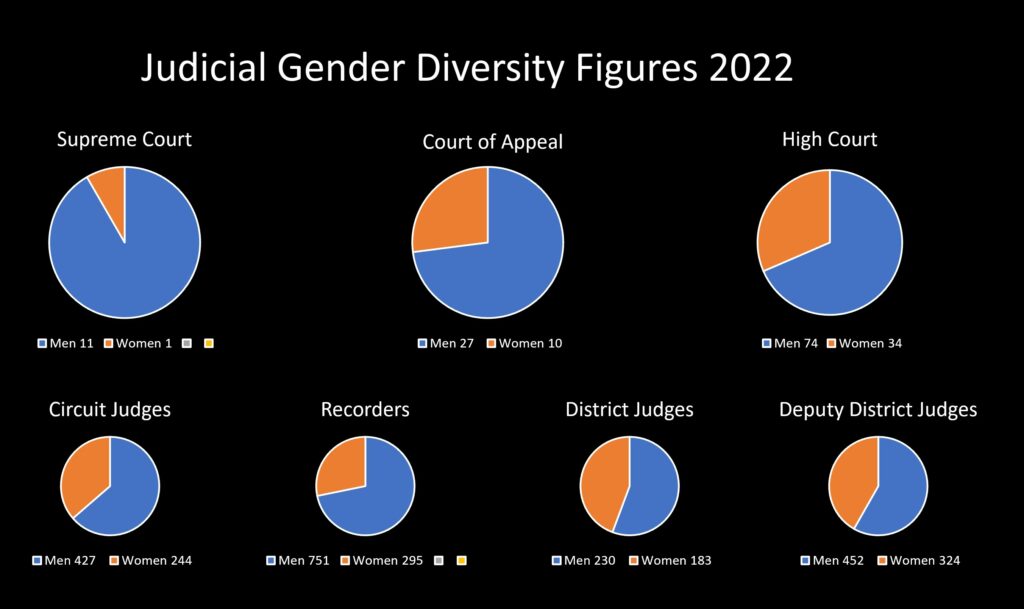 Lana believes she is on the crest of a wave of women coming through the judiciary which is important because there is evidence that diversity and equity leads to better judgements because perspectives are improved. Progress, however, is very slow and there are many barriers. When she was born only 8% of barristers were women and now it is around 40%. Retention is a big issue with many women leaving in the early stages of their careers (the average age of women leaving was 37 in 1990-1995, although by 2015-2020 that had risen to 48). There are many barriers to women’s careers – one is pupillage being hard to get before a person’s late 20’s and women often wanting to do it before they have families (pupillage is the final, vocational stage of training for those wishing to become practising barristers). Another barrier is the informal practices that have historically protected male power – “the old boys’ network”, with working practices not being family friendly. Prior to 2006 there wasn’t an independent appointments commission. Judges were appointed by a system of “secret soundings”. People could be appointed as judges without ever applying for the job The result was that people appointed were often carbon copies of serving judges and diversity was limited. Competitions for appointment are now run by the Judicial Appointments Commission (JAC), and appointments are made on the recommendations of the Judicial Appointments Commission. The JAC’s statutory duties are to: select candidates solely on merit, select only people of good character and to have regard to the need to encourage diversity in the range of persons available for judicial selection. Elizabeth Butler-Sloss’s title was Lord Justice of Appeal when she was first appointed in 1988. The title Lady Justice of Appeal had been informally recognised in 1994, and was officially changed by the Courts Act 2003. Another barrier to women in the judiciary is geography – Lana found herself appointed to courts a long journey from her home and with a young family she couldn’t stay away from home during the week like many men did in similar positions. It has also been very difficult to get flexible work which would benefit both men women and lead to better work-life balance, and better decision making.
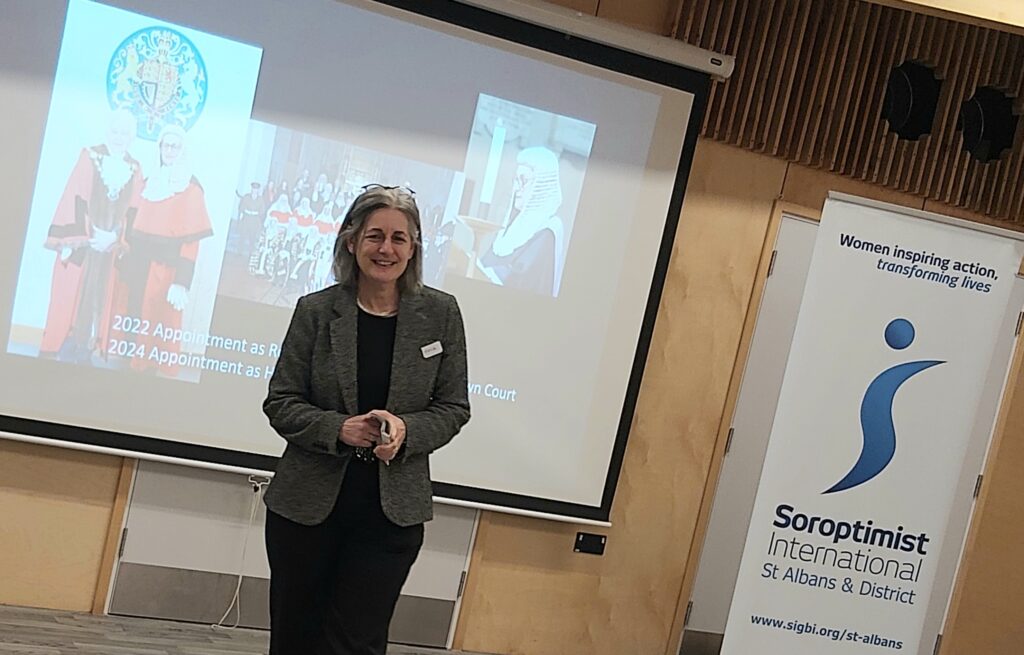 Lana has found that lots of judges don’t talk about what they do, but Lana is keen to talk about it so that people know that judges can look like her!
The percentage of women lower down in the judiciary has improved enormously in recent times, but there remain barriers which prevent women attaining the top-level positions in equal numbers to men, despite the fact that the numbers qualifying into the professions have for some time been equal.
Hearing from HHJ Lana Wood to mark International Women’s Day made for a fascinating and eye-opening evening, a perfect fit for the theme for “Rights. Justice. Action for ALL Women and Girls”. It showed clearly that a lot of actions that need to be taken to improve equity in the criminal justice system in the UK.
In lieu of a speaker fee Lana asked that the Club make a donation to The Relationships Service, formerly known as Relate, which delivers relationships counselling and mediation.