
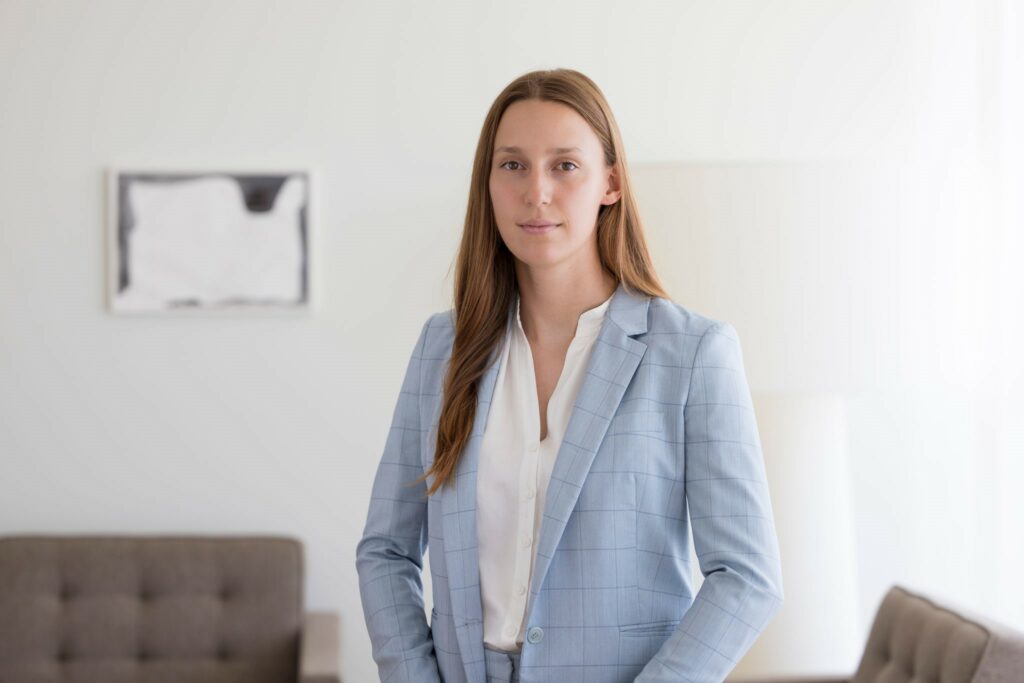
 On Mon 22 Jun the complex subject of “Investing for the Planet” was brilliantly explained by Marie Neveu, Environmental Specialist for the Pictet Group. She had been invited by Soroptimist International St Albans & District’s Planet Team. Marie’s talk was fascinating and a valuable insight into how investing needs to work to support the Planet. Everyone who attended came away with ideas of what they might start doing to influence how our pension and other funds are invested and to look for suitable ways to make more sustainable individual investments.
One simple way you can play your part is by investing your money responsibly. Responsible investing is key to making a positive impact on the planet and society while also achieving your financial goals.
However, investment decisions, so important to us all no matter where we are in life, are too often based only on financial considerations. This poses two issues. First, environmental degradation is not without financial impact, but markets rarely price these in – so portfolios bear risks and opportunities that we are not always aware of. Second, our investment decisions have an impact on the planet, whether positive or negative, and that is largely overlooked in traditional investment decision-making processes. The principals and criteria upon which these decisions are based must be adapted to include environmental needs. This awareness is growing within the finance industry, governments and individuals with implementation of initiatives gaining pace.
Marie explained that as individuals, several areas of influence can be tapped into to have a positive impact on the planet: Investments, Philanthropy, Business & Career, Family & Friends, Consumption and Civic action. She presented a simplified view of “Doughnut Economics” ; a way of thinking about the economy that aims to balance human prosperity with planetary health.
An outdated view of the world is that the environment and society are separate from profits. She described this model of the financial markets as “broken”. An updated, “Future Fit” view of the world is one where it is recognised that the environment and society are intrinsically linked to profits. Marie outlined three broad categories to consider when investing: 1. companies which are unable or unwilling to transition (brown companies) 2. Those that are transitioning to a more sustainable outcome 3.“green firms”/low carbon companies or facilitators to support those which are. Marie also discussed the need to engage with companies, following any investment to ensure sustainability goals are adhered to and for individuals to express this utilising their shareholder voting power
Responsible investment portfolios can therefore:
• invest in companies providing solutions that enable the transition to a more resilient and sustainable economy, and have credible transition plans to do so
• exclude or exit companies that are unable or unwilling to transition
• seek to engage with companies to ensure sustainable goals are part of the agenda
Marie suggested that it could be appropriate for groupings of investors (refer to the Collaborative engagement initiatives listed below) to try to influence companies currently not transitioning but capable of doing so to develop a transition plan however this would need to be reviewed regularly to ensure transitioning does actually happen.
There were some great questions, and points made by attendees as always. A point was made about countries’ performance being measured on GDP being short-sighted and no longer fit for purpose.
Marie encouraged us to research various websites from initiatives in this field: Transition Pathway Initiative, Science-based targets initiative. These lists provide useful information for investing in companies that are transitioning (or not) Global Coal Exit List, Global Oil & Gas Exit List, Forest 500. Collaborative engagement initiatives are: Climate Action 100, Nature Action 100, Ceres Valuing Water initiative.
In the Q&A Marie revealed that there will be a ‘great wealth transfer’, with 70% of the world’s wealth to be inherited by women. Given women tend to adopt greater concerns regarding sustainability, institutions will increasingly need to ensure this is a key area to address. This seemed to be a positive note to end the meeting on, and Helen Byrne thanked Marie very much, and also our Member Nicky Bloom for arranging for Marie to speak to us.
If you would like to be sent a copy of Marie’s presentation slides please request them by sending an email to sistalbans@hotmail.com.
This aligns with the work of Soroptimist International because, as the United Nations Foundation highlights, “from country leaders to CEOs to everyday citizens, we must devote far more resources — financial, political, and social — toward a more sustainable way of living if we want to protect the environment”.
Marie Neveu is an Environmental Specialist for the Pictet Group. In this role, she helps define Pictet’s environmental strategy. She joined the firm in 2021 to lead the creation of Pictet’s inaugural Climate Action Plan and the setting of externally-validated climate targets for its investments. Since then, Marie has focused on the implementation of the climate action plan, creating research and tools to support investors looking to include climate considerations in their due diligence and engagement efforts. She has also started work to assess how Pictet impacts other Planetary Boundaries and depends on ecosystem services. Marie holds a Master’s degree in Climate Change, Management and Finance from Imperial College London, a Bachelor of Commerce with a major in Finance from McGill University, and a certification on Clean Energy Transition from MIT.
Marie is working at the cutting edge of this field so we were very fortunate that she agreed to give up her time to enlighten the group. She was speaking in her personal capacity, not as a representative of the Pictet Group, and did not promote the firm or specific investment instruments.
Instead of a speaker fee Marie was asked to chose a charity for donations. She asked for support of the “Women’s Environmental Network https://www.wen.org.uk/ (a well-respected organisation dedicated to intersectional feminist climate work with grassroots UK projects). If you have any questions please email: sistalbans@hotmail.com