
 It was wonderful to be able to welcome Dr Samantha Hiew (Sam) on 27 October to talk us through the mental health challenges facing women and girls including ADHD and the Menopause. Sam described her talk as a “fireside chat”. The event was held in October to mark World Mental Health Day.
There were 30 people on the Zoom call, SI St Albans & District were delighted to welcome 11 guests from near and far.
 Women’s Health has been an issue of concern to Soroptimists for many years. Dr Hiew’s research is really important given the lack of priority shown by decision-makers to women’s mental health, and current public interest in the menopause. Sam spoke to us about the growing scientific knowledge about mental health and ADHD, and how society can respond to the needs of those identified with the condition. Sam explained how women’s expertise and lived experience is undervalued and wants to support neurodivergent women to go from surviving to thriving. She describes herself as a storyteller with a PhD in cancer research and founder of ADHD Girls which promotes awareness and training for organisations and professionals to better understand and support neurodivergent people.
 Sam started the talk by introducing herself and explaining her own lived experience as a women diagnosed with ADHD at 40. She also has an autism diagnosis, which makes her an AuDHDer (a neurotype combining autism and ADHD traits).
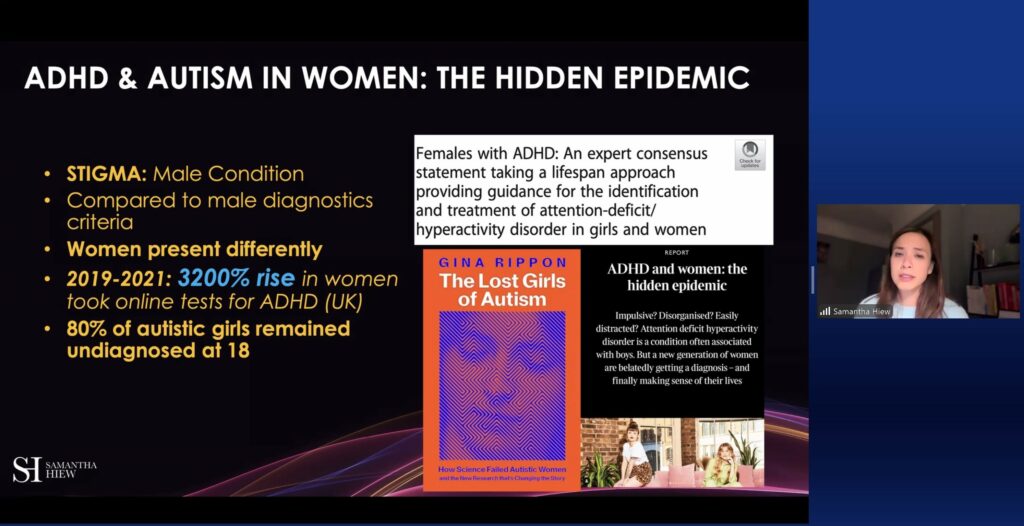
She explained that women tend to be diagnosed later than men due to the traits of Autism and ADHD presenting differently to men and boys meaning they are more likely to get missed due to biases in the diagnosis process.
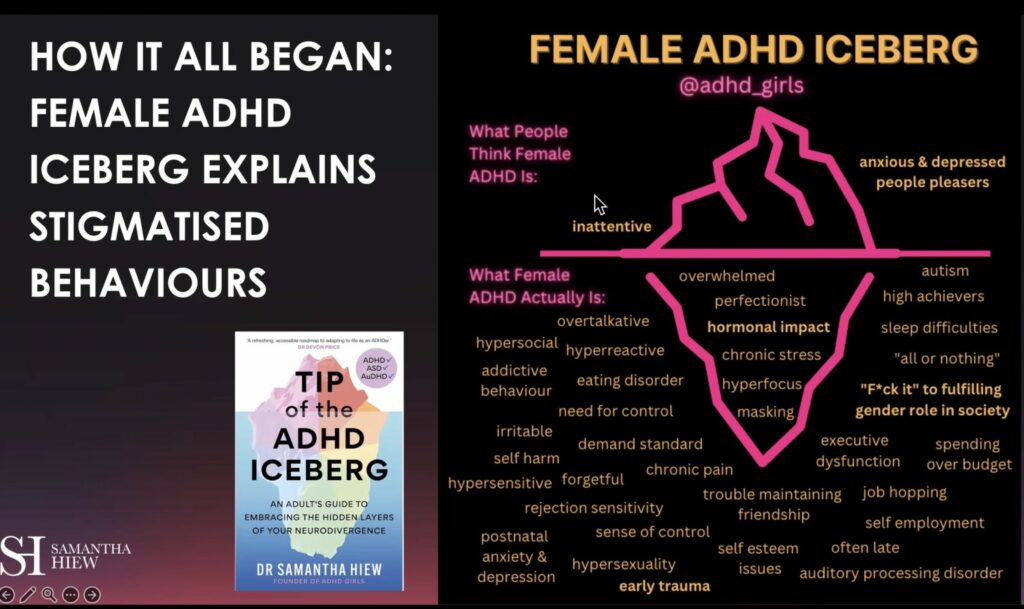
Girls are typically wired to connect with others and appear better at creating social connections meaning the social challenges associated with Neurodiversity aren’t so apparent. Although neurodiverse girls make social connections more readily, they still experience challenges maintaining relationships meaning that relationships can breakdown. Examples of the challenges faced by neurodiverse women in relationships include literal understanding where they are taking interactions on face value and missing social cues.
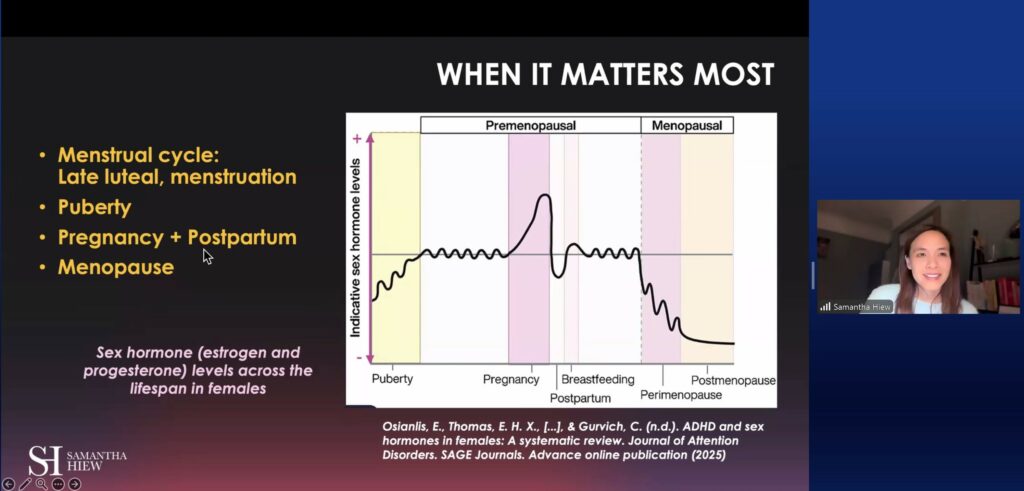 Women experience shifts in their hormone levels, particularly progesterone and oestrogen during several life stages. These are puberty, pregnancy and post-natal, perimenopause. These shifts in hormone production impact the nervous system making some of the neurodiverse traits more visible and more challenging to manage. Oestrogen is involved in the regulation of dopamine, which is present in lower levels for neurodiverse people.
Women also experience pressures from society regarding gender norms and expectations. Samantha spoke about her experiences as an Asian woman, where the pressures to conform to gender norms are more pronounced. These roles can include the roles of mother, wife, grandmother as well as other roles within society. Neurodiverse women can experience a ‘role overload’ while trying to manage these expectations with the neurodiverse traits. There is also the additional pressure to camouflage and mask traits to fit in.
Sam talked about a 3200% increase in women taking online tests to see if they are ADHD in recent years. This is in part due to an increase in awareness. Many of these women are in the perimenopause stage of their life and have been managing to mask traits until the drop in sex hormones leads to symptoms like brain fog, forgetfulness and anxiety becoming unbearable. HRT can offer some protection against the drop of hormones for some.
At least 79 gene variants at present have been identified as being present in ADHD and Autism. One example is the COMT gene which is involved in the process of cleaning out stress hormones from the body.
There were lots of questions, and the feedback both in the Zoom “chat” and afterwards was that everyone had learnt a lot from Sam’s talk. Our Member Ka Clark thanked Sam more formally at the end – Kat had benefitted personally from attending one of the Sam’s talks and had recommended her to the Club for this event.
 This the link to Sam’s book https://amzn.eu/d/8dSUd8O “
Although there was no charge for the event, Sam asked participants to donate to her community initiative the Neurodivergent Phoenix Convention. You can still donate via the Donate page on this website: https://sigbi.org/st-albans/donate/. Please understand that there is no pressure to do this.
Any queries please email sistalbans@hotmail.com