Autism in Women and Girls
The prevalence of Autism has been under-estimated in women and girls and this has been reflected in the resources directed at them.
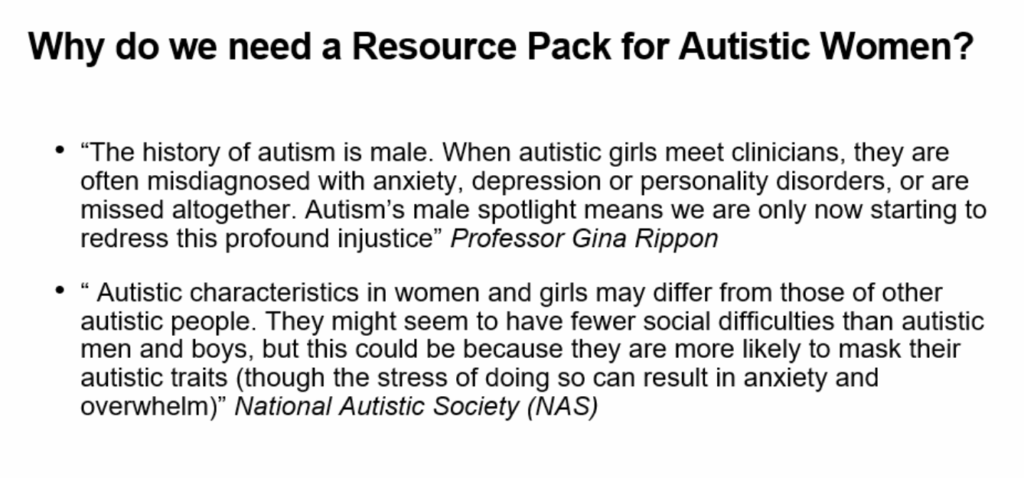
“It is important that autistic women and girls receive a diagnosis (or recognise that they are autistic) so they can understand themselves and access support. However, because of stereotyped ideas about what autism looks like and who can be autistic, many autistic women and girls struggle to get a diagnosis, receive a diagnosis late in life or are misdiagnosed with conditions other than autism.
Autistic characteristics in women and girls may differ from those of other autistic people. They might seem to have fewer social difficulties than autistic men and boys, but this could be because they are more likely to ‘mask’ their autistic traits (though the stress of doing so can result in anxiety and overwhelm). At school, autistic girls may be more likely to be part of a friendship group and this could be a reason that teachers don’t notice their differences. They may also be missed if their academic achievement masks difficulties they are facing in other areas” (National Autistic Society).